Showing posts with label Do you even care?. Show all posts

Wednesday, September 17, 2008

This is your nation on white privilege!

Someone shared this with me in an email and I had to share it with you. Read this carefully for it is truly insightful.

This is Your Nation on White Privilege
September, 14 2008
By Tim Wise

For those who still can't grasp the concept of white privilege, or who are constantly looking for some easy-to-understand examples of it, perhaps this list will help.* White privilege is when you can get pregnant at seventeen like Bristol Palin and everyone is quick to insist that your life and that of your family is a personal matter, and that no one has a right to judge you or your parents, because "every family has challenges," even as black and Latino families with similar "challenges" are regularly typified as irresponsible, pathological and arbiters of social decay.*
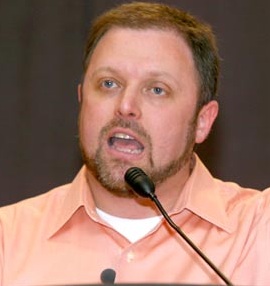
White privilege is when you can call yourself a "fuckin' redneck," like Bristol Palin's boyfriend does, and talk about how if anyone messes with you, you'll "kick their fuckin' ass," and talk about how you like to "shoot shit" for fun, and still be viewed as a responsible, all-American boy (and a great son-in-law to be) rather than a thug.* White privilege is when you can attend four different colleges in six years like Sarah Palin did (one of which you basically failed out of, then returned to after making up some coursework at a community college), and no one questions your intelligence or commitment to achievement, whereas a person of color who did this would be viewed as unfit for college, and probably someone who only got in in the first place because of affirmative action.*

White privilege is when you can claim that being mayor of a town smaller than most medium-sized colleges, and then Governor of a state with about the same number of people as the lower fifth of the island of Manhattan, makes you ready to potentially be president, and people don't all piss on themselves with laughter, while being a black U.S. Senator, two-term state Senator, and constitutional law scholar, means you're "untested."*

White privilege is being able to say that you support the words "under God" in the pledge of allegiance because "if it was good enough for the founding fathers, it's good enough for me," and not be immediately disqualified from holding office--since, after all, the pledge was written in the late 1800s and the "under God" part wasn't added until the 1950s--while believing that reading accused criminals and terrorists their rights (because, ya know, the Constitution, which you used to teach at a prestigious law school requires it), is a dangerous and silly idea only supported by mushy liberals.*

White privilege is being able to be a gun enthusiast and not make people immediately scared of you. White privilege is being able to have a husband who was a member of an extremist political party that wants your state to secede from the Union, and whose motto was "Alaska first," and no one questions your patriotism or that of your family, while if you're black and your spouse merely fails to come to a 9/11 memorial so she can be home with her kids on the first day of school, people immediately think she's being disrespectful.*

White privilege is being able to make fun of community organizers and the work they do--like, among other things, fight for the right of women to vote, or for civil rights, or the 8-hour workday, or an end to child labor--and people think you're being pithy and tough, but if you merely question the experience of a small town mayor and 18-month governor with no foreign policy expertise beyond a class she took in college--you're somehow being mean, or even sexist.*
White privilege is being able to convince white women who don't even agree with you on any substantive issue to vote for you and your running mate anyway, because all of a sudden your presence on the ticket has inspired confidence in these same white women, and made them give your party a "second look."*

White privilege is being able to fire people who didn't support your political campaigns and not be accused of abusing your power or being a typical politician who engages in favoritism, while being black and merely knowing some folks from the old-line political machines in Chicagomeans you must be corrupt.*

White privilege is being able to attend churches over the years whose pastors say that people who voted for John Kerry or merely criticize George W. Bush are going to hell, and that the U.S. is an explicitly Christian nation and the job of Christians is to bring Christian theological principles into government, and who bring in speakers who say the conflict in the Middle East is God's punishment on Jews for rejecting Jesus, and everyone can still think you're just a good church-going Christian, but if you're black and friends with a black pastor who has noted (as have Colin Powell and the U.S. Department of Defense) that terrorist attacks are often the result of U.S.foreign policy and who talks about the history of racism and its effect on black people, you're an extremist who probably hates America.*

White privilege is not knowing what the Bush Doctrine is when asked by a reporter, and then people get angry at the reporter for asking you such a "trick question," while being black and merely refusing to give one-word answers to the queries of Bill O'Reilly means you're dodging the question, or trying to seem overly intellectual and nuanced.* White privilege is being able to claim your experience as a POW has anything at all to do with your fitness for president, while being black and experiencing racism is, as Sarah Palin has referred to it a "light" burden.*

And finally, white privilege is the only thing that could possibly allow someone to become president when he has voted with George W. Bush 90 percent of the time, even as unemployment is skyrocketing, people are losing their homes, inflation is rising, and the U.S. is increasingly isolated from world opinion, just because white voters aren't sure about that whole "change" thing. Ya know, it's just too vague and ill-defined, unlike, say, four more years of the same, which is very concrete and certain.White privilege is, in short, the problem.

Tim Wise on You Tube

Marcus Girard Website
Marcus Girard Email Address

Our Young People and Sex

Click here to go to the source of this article

Our Young People and Sex
According to the Centers for Disease Control and Prevention (CDC), in the United States more than 19 million STD infections occur annually. Half of them are contracted by youth ages 15 to 24 (CDC 2003). Facts such as those are startling and should be taken very seriously. The most important thing to remember is to talk to your child when they are young. Teaching your child to wait until they are married to have sex is one of the most important factors in preventing pre-marital sex. When you talk to your child, incorporate the benefits of a loving relationship, peer pressure and making healthy choices. Teach them how to value themselves and build self-esteem. Finally, let your child know that they are important to you and that they can talk to you about anything.

Getting a child to talk to you maybe harder than anything you have ever tried to do. Whether you think they are listening 5, 10 or 100 percent of the time, remember that something is better than nothing because when you least expect your child can surprise you and make the right decision. Teaching your child how to refuse the pressures of sexual activity can be the most important things you teach him or her. Let your child know that you understand peer pressure and how strong it can be. Then help your teen think through and plan what he or she would do in a tough and/or uncomfortable situation. The final not to take with you is…you are the first influence in your child’s life and that takes top priority over anything else.


Unplanned pregnancy among young adults is at one of the most important public and social issues challenging the world today. Even the sound of the words “teen pregnancy” can be frightening to any parent. Teen pregnancy can be very tough on the entire family; emotionally and physically. As a parent do you think that the words “teen pregnancy” applies to your teen? If you answered “no”, then you are wrong. As a parent, sometimes being naïve seems to be easy and convenient for everyone. But the truth is that as a parent, you have can have a critical impact on your child and how they navigate through difficult and complicated waters of being a teen. Whether you know it, your teen may or may not have already contemplated thoughts about sex and even pregnancy. You may not know their thoughts about sex, but for them to know the truth and the consequences of having sex and becoming a teen parent they must know your thoughts. Have you ever wondered what your teen is wishing you’d say to them or if they actually want to have the so called talk with you? As a parent you must ask a question in order to get an answer. Sometimes fear of getting in trouble will keep your teen from communicating with you, but don’t let that happen in your household. Get inside the mind of your teen by starting the conversation and make things clear to your teen about the topics of sex, love, relationships, pregnancy and values, even if they act like they don’t want to hear it.As a parent you can play a major role in whether or not their teen will have sex. A few ways to prevent your teen from being a statistic of teen pregnancy, you must teach them to save sex for marriage. You must also teach them that aside from the risk of being a teen parent, they have a high risk of contracting STD’s because of unprotected sex, dropping out of school and living in poverty.


For more ways to talk to your teen about abstinence, sex and teen pregnancy please contact your local G-RAP office at 229-567-9066.


Tuesday, September 16, 2008

I love and support Michelle Obama too!

Click here for the source of this article

Black. Female. Accomplished. Attacked

By Sophia A. Nelson
Sunday, July 20, 2008; B01

There she is — no, not Miss America, but the Angela-Davis-Afro-wearing, machine-gun-toting, angry, unpatriotic Michelle Obama, greeting her husband with a fist bump instead of a kiss on the cheek.

It was supposed to be satire, but the caricature of Barack Obama and his wife that appeared on the cover of the New Yorker last week rightly caused a major flap. And among black professional women like me and many of my sisters in the Alpha Kappa Alpha sorority, who happened to be gathered last week in Washington for our 100th anniversary celebration, the mischaracterization of Michelle hit the rawest of nerves.

Welcome to our world.

We’ve watched with a mixture of pride and trepidation as the wife of the first serious African American presidential contender has weathered recent campaign travails — being called unpatriotic for a single offhand remark, dubbed a black radical because of something she wrote more than 20 years ago and plastered with the crowning stereotype: “angry black woman.” And then being forced to undergo a politically mandated “makeover” to soften her image and make her more palatable to mainstream America.

Sad to say, but what Obama has undergone, though it’s on a national stage and on a much more prominent scale, is nothing new to professional African American women. We endure this type of labeling all the time. We’re endlessly familiar with the problem Michelle Obama is confronting — being looked at, as black women, through a different lens from our white counterparts, who are portrayed as kinder, gentler souls who somehow deserve to be loved and valued more than we do. So many of us are hoping that Michelle — as an elegant and elusive combination of successful career woman, supportive wife and loving mother — can change that.

“Ain’t I a woman?” Sojourner Truth famously asked 157 years ago. Her ringing question, demanding why black women weren’t accorded the same privileges as their white counterparts, still sums up the African American woman’s dilemma today: How are we viewed as women, and where do we fit into American life?

“Thanks to the hip-hop industry,” one prominent black female journalist recently said to me, all black women are “deemed ’sexually promiscuous video vixens’ not worthy of consideration. If other black women speak up, we’re considered angry black women who complain. This society can’t even see a woman like Michelle Obama. All it sees is a black woman and attaches stereotypes.”

Black women have been mischaracterized and stereotyped since the days of slavery and minstrel shows. In more recent times, they’ve been portrayed onscreen and in popular culture as either sexually available bed wenches in such shows as the 2000 docudrama “Sally Hemings: An American Scandal,” ignorant and foolish servants such as Prissy from “Gone With the Wind” or ever-smiling housekeepers, workhorses who never complain and never tire, like the popular figure of Aunt Jemima.

Even in the 21st century, black women are still bombarded with media and Internet images that portray us as loud, aggressive, violent and often grossly obese and unattractive. Think of the movies “Norbit” or “Big Momma’s House,” or of the only two black female characters in “Enchanted,” an overweight, aggressive traffic cop and an angry divorcée amid all the white princesses.

On the other hand, when was the last time you saw a smart, accomplished black professional woman portrayed on mainstream television or in the movies? If Claire Huxtable on “The Cosby Show” comes to mind, remember that she left the scene 16 years ago.

The reality is that in just a generation, many black women — who were mostly domestics, schoolteachers or nurses in the post-slavery Jim Crow era — have become astronauts, corporate executives, doctors, lawyers, engineers and PhDs. You name it, and black women have achieved it. The most popular woman on daytime television is Oprah Winfrey. Condoleezza Rice is secretary of state.

And yet my generation of African American women — we’re called, in fact, the Claire Huxtable generation — hasn’t managed to become successfully integrated into American popular culture. We’re still looking for respect in the workplace, where, more than anything else, black women feel invisible. It’s a term that comes up again and again. “In my profession, white men mentor young whites on how to succeed,” a financial executive told me, but “they’re either indifferent to or dogmatically document the mistakes black women make. Their indifference is the worst, because it means we’re invisible.”

As someone who recently left a large law firm to work in the corporate sector, I have to agree. I liked my firm, but I always felt that I had to sink or swim on my own. I didn’t get the kind of mentoring that I saw white colleagues, male and female, getting all around me. The firm was actually one of the better ones when it came to diversity, and yet of 600 partners, only five were black women.

A 2007 American Bar Association report titled “Visible Invisibility” describes how black women in the legal profession face the “double burden” of being both black and female, meaning that they enjoy none of the advantages that black men gain from being male, or that white women gain from being white.

Invisibility isn’t the only problem. I run an organization dedicated to supporting African American professional women and often run empowerment workshops at various conferences. At a recent such workshop, I asked the participants to list some words that would describe how they believe they’re viewed in the workplace and the culture at large. These are the kinds of words that came back: “loud,” “angry,” “intimidating,” “mean,” “opinionated,” “aggressive,” “hard.” All painful words. Yet asked to describe themselves, the same women offered gentler terms: “strong,” “loving,” “dependable,” “compassionate.”

Where does the disconnect come from? Possibly from the way black women have been forced into roles of strength for decades. “Black women are the original multitaskers of necessity,” says one nonprofit executive. “We’ve perfected it because we’ve been doing it for so long. But people don’t appreciate the skill it requires, and they don’t recognize the toll it takes on us as human beings.”

For all our success in the professional world, we have paid a significant price in our private and emotional lives. A life of preordained singleness (by chance, not by choice) is fast becoming the plight of alarming numbers of professional black women in America. The fact is that the more money and education a black woman has, the less likely she is to marry and have a family.
Consider these stunning statistics: As of 2007, according to the New York Times, 70 percent of professional black women were unmarried. Black women are five times more likely than white women to be single at age 40. In 2003, Newsweek reported that there are more black women than black men (24 percent to 17 percent) in the professional-managerial class. According to Department of Education statistics cited by the Journal of Blacks in Higher Education, black women earn 67 percent of all bachelor’s degrees awarded to blacks, as well as 71 percent of all master’s degrees and 65 percent of all doctoral degrees.

With all the challenges facing professional black women today, we hope that Michelle Obama will defy the negative stereotypes about us. And that, now that a strong professional black woman is center stage, she’ll bring to light what we already know: that an accomplished black woman can be a loyal and supportive wife and a good mother and still fulfill her own dreams. The fact that her husband clearly adores Michelle is both refreshing and reassuring to many of us who long to find a good man who will love and appreciate us.

Recently, a friend who’s a married professional mother of three girls wrote to me: “I think one of the most interesting things about Michelle Obama is that what she and her husband are doing is pretty revolutionary these days — and I don’t mean running for president. For a black man and woman in the U.S. to be happily married, with children, and working as partners to build a life — let alone a life of service to others — all while rearing their children together is downright revolutionary.”

It’s how so many black professional women feel. And our hope is that if Michelle Obama becomes first lady, the revolution will come to us at last.
snelson@iaskinc.org

Sophia A. Nelson is a corporate attorney and president of iask, Inc., an organization for African American professional women.

Sunday, May 25, 2008

We need to adopt these beautiful black babies!

Source of this Article: http://www.blackrefer.com/br-family1.html

The Internet Offers Adoption Resources for African Americans Hoping to Adopt
Author: Mardie Caldwell, COAP


With infertility struggles on the rise, more hopeful parents are turning to the internet for help in building their families through adoption. African American couples and women who are facing infertility are logging on to their computer to find resources to help them adopt.
Expectant African American women seeking adoptive parents for their children have increased drastically in the last year, even though the African American community has historically been opposed to the option of adoption. Opponents of adoption often state "We take care of our own," and "We don't believe in having anyone outside of our family raising our own flesh and blood." However, this too has been quickly changing, as the internet is opening many new avenues for adoption. Women access the websites from a library or a friend's computer if they don't have their own.
In the past, if a young woman was not ready to parent, she just "got ready." Adoption was not an option to her as a African American woman. The pressure from family and friends was just too great. She and her family would often raise the child together. Many African American grandmothers are involved in raising their grandchildren; however, some are unable to raise them because of poor health or finances.
Birth mothers now have many choices in adoption, and are making decisions for the good of their child and for themselves, instead of relying on their families. This marks a new view of adoption for African American birth parents.
Shauna was 19 when she became pregnant for the first time. "I felt terrible. I was raised in the church, and my mother raised us to get ahead and have a good future." She remembers the conversation in her mother's kitchen. "Mom, I want to finish college," Shauna pleaded. "I want a career; I want more than you have. I'm not ready to be a mother." Her mother slapped Shauna and left the room. She was asked to leave the house, and that's when she decided to look at adoption. "None of my family supported me, and I knew I wanted to do more. I knew I couldn't take care of a baby either. Adoption was the best answer for me".
As more African American women start to attend college away from their families, they do not want to give up their independence to raise a child. Others have said that their parents have stated "you made your bed, now sleep in it," offering no help at all. Increasingly, more African American women are choosing adoption, even if it means their family may be upset for a while about their choice. They feel they can live with that in order to give their child a good life.
Women facing an untimely pregnancy are turning in larger numbers to the web to find resources, services and support. The internet allows birth mothers to research and read about adoption in the privacy of their homes. This is allowing families and birth mothers to work with organizations across the country, such as Lifetime Adoption, which has an African American Enrichment program, and does more than 120 adoptions every year.
22 year old Sheila was seeking to relocate out of state until the birth and then wanted to return home to continue her career. She said, "It's no one's business but mine." Since 1996, internet adoption sites have more than quadrupled. In the past it would have been difficult for prospective adoptive parents for example in Michigan to meet a birth mother in California. Now, wIth web sites like African American Adoptions and Bi-Racial Adoptions adoption answers are at everyone's fingertips anytime of the day. Birthmothers can read about waiting adoptive families of all races, view their photos, and read their online "dear birthmother" letters before speaking to them on the phone. The site Lifetime Adoption includes the confidential posts of over 200 birth mothers of all ages who are seeking adoptive families. Many of them are African American women. Lifetime states "it is not uncommon for a birthmother to email or call after finding three families she is interested in speaking to, just from reading their profiles on the web site." African American families are often matched very quickly. Most birthmothers are requesting married couples with traditional values and some faith in God, with at least one parent who is African American.
Some women are comfortable contacting families of another race, as long as the family has already adopted a child who is African American or bi-racial. Other women are open to families of all races, as long as the family will maintain the African American culture with their child. When it comes to contact after adoption, many birthmothers would like to exchange letters and photos with their birth child after they are adopted. Others want little or no contact. Many birthmothers have children already, but for others this is their first pregnancy.
An adoption coordinator at Lifetime Adoption commented, "There always seems to be a shortage of black adoptive families. Most are chosen within weeks of being featured on the African American website. The need for more black adoptive parents who can provide a secure, loving and stable home is always present." Yet, many families who are open to adoption are unaware of this need. Websites completely devoted to African American Adoptions are helping to raise the awareness of this issue.
Websites of this kind are great resources for the African American birthmother as well. As with any adoption, internet birthmothers must provide proof of pregnancy, are screened, and are given resources to help them throughout the adoption process. These resources include optional counseling, and opportunities to speak with an attorney free of charge.
These services are offered regardless of where the birthparent lives. If the birthparent would like even more privacy, these services can be offered over the phone. Many African American birthmothers face immense pressure from family and friends to keep their babies, so outside support and help is very important.
In a recent interview, a social worker gave the following information: "Statistics show that in the US, there are over 500 thousand children in foster care. The majority are African American or biracial children. Approximately 100,000 of these are waiting to be adopted. Because the number of children entering the foster care system is so great, the children can't be processed quickly enough. So, they are being placed in overburdened foster care programs."
Many state and county adoption programs have so many hoops to jump through before a child is available for adoption. Even if the assigned social worker knows that the best interest of the child would be to have them in a permanent adoptive home, their hands are tied with red tape for months or even years . Children that could have been adopted immediately as infants become older, often with more problems, making it harder for some to be adopted.
Some websites are trying to help alleviate this problem by offering a 24 hour hotline to call. Birthparents and hospital social workers are now given the option to call whenever the baby is born. Their child is adopted immediately, going home with the adoptive family from the hospital, and avoiding foster care altogether. "When we receive a call in the middle of the night from a birthmother or social worker, we are able to help them the same day. Birthmothers can speak to pre-screened adoptive families on the phone," says Heather Featherstone, Director of Adoption Services at Lifetime Adoption. Once the birthmother has chosen a family, she has the option to meet them, and the baby normally goes home with the adoptive family from the hospital.
Shauna was one mother that felt that this was a big benefit of adoption, "I didn't want to take her home. When I signed the papers, I had a real peace about my decision." Legal and medical expenses are paid for by the adoptive parents, so there are no expenses to the birthparents. Since the adoption is private, the process is much more confidential, allowing the birthmother freedom to share her plans only with whom she wishes.
Latisha was in her first year of nursing school when she found she was pregnant after a one-night encounter. She was afraid that her parents would find out about the pregnancy. "I just knew adoption was the only solution," she said. She wanted her baby to be adopted by a family she chose. She found her baby's adoptive family on the internet in the privacy of her dorm room. "Not even my roommate knew about my plans for adoption until I had chosen the family and was going to meet them. She even went with me and was very supportive." Through the internet site Open Adoption, she was able to select and meet a young professional African American adoptive couple. Latisha and the chosen adoptive parents spoke on the phone, met and spent time together before the birth and at the hospital. "We had a lot in common, and that helped," she says. Once the baby was born, Latisha planned to let the adoptive mother hold the baby first in the delivery room. "By planning the adoption, I was aware of what to expect," she said. "It confirmed my decision when I saw them holding their new baby. Even though I gave birth to him, I knew they were his parents. I didn't want a social worker making the decisions about where my baby was going."
Three years later, she receives e-mails, letters and photos about her son's life. The family has a web site where they post current photos of the baby that she can access. It was Latisha's choice not to have physical contact: "I felt the time I spent with them convinced me that they would love him just as much as I did. I just didn't want to interfere in their life. I am always going to be his mother, they are his parents, and I am okay with that. The photos are wonderful, I know he has a great life, and that helps me feel good about my decision. It was hard at the beginning and I experienced some depression, but I know that they will share with him the photos and letter I wrote him. If in the future he would like to meet me, that will be his choice. I am happy for my son and his new family." The internet and open adoption programs are giving pregnant women options for their unplanned pregnancy.
About the Author: Mardie Caldwell, C.O.A.P. is a Certified Open Adoption Practitioner, an award winning author of 2 adoption books Adopting Online and Adoption: Your Step-by-Step Guide. Mardie is also the talk show host of Let's Talk Adoption.com with Mardie Caldwell and the founder of Lifetime Adoption in 1986. She travels and speaks nationwide on adoption topics, family topics, infertility and writing. She has been quoted in and consulted for Parenting and Adoption magazines and has appeared on CNN, CBS, ABC, BBC, NBC, and Fox. Featured in Parade Magazine, Caldwell is an adoptive mother living in Northern California.

Do you see how savage our youth are becoming...


Marcus comments:
"This is yet another example of the filth, the ignorance, the msysoginy and self hatred that rap music promotes to our young people. We are not going to get away from it. I don't care if Barack Obama wins the election or loses it, we have to do something about the horrible condition that rap music and hip hop culture is leaving our young people in. Parents have to take more responsibility to make sure that they know what their children are watching and listening to!"

Wednesday, May 14, 2008

And the distasters continue....

Source of topic: http://www.bloomberg.com/apps/news?pid=20601082&sid=aWSWIqRRjPY8

China Hit by 7.9-Magnitude Quake; More Than 8,700 Die

By Aaron Sheldrick and Eugene Tang


May 12 (Bloomberg) -- China was hit by a magnitude-7.9 earthquake, the nation's strongest in 58 years, killing more than 8,700 people. The temblor in Sichuan province shook buildings in Beijing, more than 1,500 kilometers (930 miles) away.


The quake struck at 2:28 p.m., 10 kilometers deep and 90 kilometers west-northwest of the central city of Chengdu, followed by aftershocks including a magnitude-6 quake 15 minutes later, the U.S. Geological Survey said. Chengdu, home to 11 million people, is the capital of Sichuan, site of 40 percent of China's gas deposits and its largest panda reserve.

``The epicenter of today's quake was shallow, which means it released more destructive energy,'' Zhang Guomin, a researcher at the China Seismology Bureau, told the state-run Xinhua News Agency. ``We have to guard against mudslides and collapsing buildings.''

The death toll in the province is at least 8,700, Xinhua said, with as many as 5,000 killed and 10,000 injured in one county, Beichuan. Rescuers recovered at least 50 bodies from the debris of a high school in the city of Dujiangyan, about 100 kilometers from the epicenter, Xinhua said.

As many as 900 students were buried in the rubble.

China allocated 200 million yuan ($28.6 million) for disaster relief, Xinhua said.

Older Buildings
The death toll may rise, Deng Changwen, a spokesman for the Sichuan provincial seismological bureau, was quoted as saying by Xinhua. Rescuers battled their way to reach Wenchua County, near the epicenter, using excavators and cranes to remove debris on the roads, Xinhua reported.
Four military helicopters heading to the area were forced to return because of heavy rain, the news service said.


``The rescue efforts will be focused on the older parts of the city, where there are older buildings that aren't well reinforced,'' Deng said.


The quake was originally reported as magnitude 7.8 before it was revised by the USGS today.


Five other schools collapsed in the province's Deyang City, leaving an unknown number of students buried, Xinhua said. Four students were killed and at least 100 were injured when two schools collapsed in Liangping county of Chongqing municipality, adjacent to Sichuan. Chongqing is about 350 kilometers from the epicenter of the temblor.


Buildings in Beijing shook for more than three minutes and traffic stopped. Construction cranes ceased work, while hundreds of people were seen scrambling to get out of buildings including the China World Tower, one of the tallest structures in the Chinese capital.


Felt in Bangkok
There were no immediate reports of injuries or damage in the capital. Shaking was felt as far as Hong Kong and Bangkok in Thailand, 1,950 kilometers away.

China is to host the Olympics Games in August at more than 30 venues. The frequency of earthquakes in the Beijing area was taken into account during construction, and none of the venues was damaged, Sun Weide, deputy director for the Olympic media, told Agence France-Presse today.

The quake sparked panic in cities and towns across Sichuan and other central provinces, Xinhua said. No damage was reported at the Three Gorges Dam, the world's largest hydroelectric dam, Xinhua said.

The quake damaged more than 2,000 China Mobile Ltd. base stations, Vice President Sha Yuejia said in an interview broadcast on state-run China Central Television.

Trading Halted
The Shanghai Stock Exchange said trading in Sichuan Changhong Electric Co., Chongqing Iron & Steel Co. and 43 other listed companies based in Sichuan province and Chongqing city was suspended until they provide investors with trading updates.


The quake may help fuel increases in corn and soybeans after the disaster threatened to disrupt domestic supplies, analysts said.


``The earthquake in China is going to cause major disruption in transportation,'' which could boost demand for U.S. grain and meat imports, said Roy Huckabay, an executive vice president for the Linn Group in Chicago. ``Chinese soybean prices soared overnight,'' a sign of increased demand for available supplies, Huckabay said.


Chinese carriers including China Eastern Airlines Corp. halted flights to some cities hit by the quake.


Pleas for Calm
Chinese Premier Wen Jiabao, who described the earthquake as a ``disaster,'' called for calm, according to state media, while President Hu Jintao issued an order for an immediate response from government agencies, according to Xinhua.


Today's earthquake was the world's strongest since a 7.9- magnitude temblor struck Indonesia in September, according to the USGS. It was the biggest to hit China since a magnitude-8.6 quake struck Tibet in 1950, killing 1,526 people. China's deadliest disaster was a 7.5-magnitude quake that killed 250,000 people in northeastern China's Tangshan in 1976.


The USGS defines an earthquake of magnitude 7 or more as ``major,'' and one above 8 as ``great.''


There are 17 quakes measuring 7 to 7.9 annually worldwide on average, USGS said on its Web site, with five occurring so far this year. On average, there is one temblor annually measuring 8 or more.


``I extend my condolences to those injured and to the families of the victims of today's earthquake in China's Sichuan province,'' U.S. President George W. Bush said in a statement issued by the White House. ``I am particularly saddened by the number of students and children affected by this tragedy. The thoughts and prayers of the American people are with the Chinese people, especially those directly affected. The United States stands ready to help in any way possible.''


Skyscrapers Evacuated
Hundreds of employees were evacuated from skyscrapers in the Lujiazui district of Shanghai, the city's financial center, where the stock exchange and banks including Citigroup Inc. and HSBC Holdings Plc have offices. No damage was reported.


Sichuan produced about 22 percent of the nation's natural gas output in 2006, according to China National Petroleum Corp. and BP Plc's annual energy report.


To contact the reporters on this story: Aaron Sheldrick in Tokyo at asheldrick@bloomberg.net; Eugene Tang in Beijing at eugenetang@bloomberg.net. Last Updated: May 12, 2008 15:01 EDT

Lord have mercy! This is tragic...

Source of Topic: http://news.yahoo.com/s/ap/20080514/ap_on_re_as/myanmar

Red Cross: Up to 128,000 may have died in Myanmar

YANGON, Myanmar - The Red Cross on Wednesday boosted its estimate of the cyclone death toll in Myanmar to as many as 128,000 — a much higher figure than the government tally. The U.N. warned a second wave of deaths will follow unless the military regime lets in more aid quickly.
The grim forecast came as heavy rains drenched the devastated Irrawaddy River delta, disrupting aid operations already struggling to reach up to 2.5 million people in urgent need of food, water and shelter.

"Another couple of days exposed to those conditions can only lead to worsening health conditions and compound the stress people are living in," said Shantha Bloemen, a spokeswoman for UNICEF.

A tropical depression in the Bay of Bengal added new worries, but late in the day forecasters said it was weakening and unlikely to grow into a cyclone.

Myanmar's government issued a revised casualty toll Wednesday night, saying 38,491 were known dead and 27,838 were missing.

The International Federation of Red Cross and Red Crescent Societies, however, put the number of dead at between 68,833 and 127,990. It said it arrived at the figure by pooling and extrapolating assessments by 22 other aid groups and organizations in 58 townships.
U.N. officials said there could be more than 100,000 dead.

The Red Cross estimated the number of people needing help after cyclone surged over the low-lying delta on May 3 at between 1.64 million and 2.51 million.

But the junta still refused to accept help from foreign aid experts, who have vast experience in handling humanitarian crises.

It insisted Myanmar can handle the disaster on its own — a stance that appeared to stem not from the isolationist regime's ability but from its deep suspicion of most foreigners, who have frequently criticized its human rights abuses and crackdowns on democracy activists.

"The government has a responsibility to assist their people in the event of a natural disaster," said Amanda Pitt of the U.N. Office for Humanitarian Affairs.

"We are here to do what we can and facilitate their efforts and scale up their response. It is clearly inadequate, and we do not want to see a second wave of deaths as a result of that not being scaled up," she said.

Myanmar's prime minister, Lt. Gen. Thein Sein, told visiting Thai Prime Minister Samak Sundaravej on Wednesday that the government was in control of the situation and didn't need foreign experts.

"They have their own team to cope with the situation," Samak said after returning to Bangkok. He said the junta gave him a "guarantee" that there was no starvation or disease outbreaks among survivors.

But critics say the government is woefully lacking in helicopters, trucks and boats as well as planning expertise needed to distribute aid to survivors, who have jammed into monasteries and relief centers or are camping outside.

U.N. agencies and other voluntary groups have been able to reach only 270,000 of the affected people, said Elisabeth Byrs of r the U.N. Office for Humanitarian Affairs in Geneva.

She said the World Food Program would need 55,000 tons of rice to feed 750,000 people for three months, but the agency had been able to ship in only 361 tons so far.

The junta did grant approval Wednesday for a Thai medical team to visit the delta, said Dr. Thawat Sutharacha of Thailand's Public Health Ministry. If the team goes as scheduled Friday, it will be the first foreign aid group to work in the ravaged delta.

Myanmar has limited the few international aid workers in the country to Yangon, the country's biggest city, and used police to keep foreigners from going to the delta.

The government gave a little ground to demands that it let in more experts. It announced it would allow in 160 relief workers from neighboring countries — India, China, Bangladesh and Thailand. It was not clear whether they would be permitted to go to the delta.

In New York, U.N. humanitarian chief John Holmes welcomed the junta's move. But he said it was not enough and demanded that Myanmar open its borders to foreign relief specialists and let outsiders work in the Irrawaddy delta.

"The relief getting through under the kind of restrictions we're operating under is by no means adequate to the task, and it's hard to see how just continuing with the status quo can ever be sufficient in the current critical time period that we're working in," Holmes said.

U.N. Secretary-General Ban Ki-moon called a meeting of key donors and Myanmar's neighbors to weigh options for speeding aid to cyclone victims.

"Even though the Myanmar government has shown some sense of flexibility, at this time it's far, far too short," he said. "The magnitude of this situation requires much more mobilization of resources and aid workers."

He also expressed frustration that he had not been able to arrange direct talks with the junta's chairman, Senior Gen. Than Shwe, despite repeated phone calls and letters.

While it has kept out all but a few foreign aid workers, the regime has accepted tons of provisions sent by international donors, including the United Nations and the United States.

Five U.S. C-130 military transport planes delivered drinking water, blankets, mosquito nets and plastic sheets Wednesday. Lt. Col. Douglas Powell said 197,080 pounds of provisions had been sent in on eight U.S. flights since Monday.

The State Department renewed an appeal for the junta to allow in outside disaster relief experts and more assistance. "This is not a political issue. This really is simply a humanitarian issue," said deputy spokesman Tom Casey.

The European Union's top aid official, Development Commissioner Louis Michel, said he was not opposed to the idea of parachuting aid into Myanmar, but said he did not think it was workable. Others have suggested unilateral air drops to circumvent the junta's restrictions.
___
Associated Press writers Edith M. Lederer and John Heilprin at the United Nations, Matthew Lee in Washington and Sutin Wannabovorn in Bangkok, Thailand, contributed to this report.

Peace and Love to you dear family. My name is Brother Marcus and welcome to The Knowledge Cafe. I am so honored that you have chosen to visit this blog and share your opinions with us. I have been blessed to work with thousands of youth and adults over the last fifteen years and I have decided to open this blog up to everyone who would like to enlighten folks with knowledge, wisdom and understanding. Please feel free to post your comments on whatever topic you may desire.